
Posturology Training: Become an Expert in Postural Imbalances with the OTTE Method
Why Train in Posturology?

Hernie discale
Migraine
Genou douloureux
Épine calcanéenne
Épaule douloureuse
Torticoli
Épicondylite
Sciatic
Are you an osteopath, podiatrist, physiotherapist, physician, strength and conditioning coach, or healthcare practitioner? Are you looking for posturology training that enables you to understand, diagnose, and treat postural imbalances using an innovative method?
Posturology is a key clinical discipline for healthcare professionals who want to go beyond symptom management and address the root causes of chronic pain (low back pain, neck pain, vertigo, instability). However, most training programs are limited to a static approach, analyzing posture only in standing or sitting positions, without considering real movement—where imbalances truly emerge.
Our posturology training, based on the OTTE method and orthokinesy, offers a dynamic and multidisciplinary approach, recognized for its clinical effectiveness. Using innovative tools such as the OPS software (high-precision 3D biomechanical analysis), ortho-dynamic straps, and custom-made active postural insoles, you will learn how to re-educate posture in movement, achieving sustainable and measurable results.
The Evolution of Posturology: Toward a Dynamic and Multidisciplinary Approach
Static posturology, which is widely taught and practiced, has laid the essential foundations of postural analysis. It is based on tools such as the podoscope, clinical tests (Romberg test, finger pointing test), and corrective solutions (orthopedic insoles, orthoses). These methods have proven effective in assessing and compensating for imbalances in a standing position.
However, advances in biomechanics and neuroscience have shown that postural imbalances are not limited to static posture. In fact, 80% of postural disorders (chronic pain, instability, compensatory patterns) manifest during movement: walking, running, sports gestures, or occupational activities.
It is within this context that Orthokinesy emerged—a logical evolution of posturology that integrates dynamic movement to provide a comprehensive and active approach to managing postural imbalances.

1. A Comprehensive Analysis: Static AND Dynamic
Static Posturology: A First Level of Analysis
Static posturology makes it possible to identify imbalances in a standing position, such as:
- Plantar Load Asymmetries
- Spinal Deviations
- Muscle Tension in a Fixed Position
Example: A patient suffering from chronic low back pain may present an asymmetry in weight distribution in a static position, revealed by a podoscope. This initial analysis is essential for understanding basic compensatory patterns.
The Contribution of Orthokinesy: Dynamic Analysis
Orthokinesy complements this approach by adding movement analysis, where imbalances truly become apparent. Using tools such as the OPS software (3D motion analysis), it becomes possible to identify:
- Les compensations en marche ou en course (ex : rotation du bassin, blocage de la cheville)
- Inappropriate Motor Strategies (e.g., overuse of a muscle group to compensate for a weakness)
- Vestibular or Oculomotor Imbalances That Only Appear During Movement
Clinical example: A rugby player suffering from post-traumatic vertigo consults for frequent falls. A static assessment reveals no abnormalities, but a dynamic analysis (using OPS software) highlights a vestibular compensation deficit during changes of direction. Thanks to dynamic rehabilitation, his symptoms resolved within six weeks.
- Orthokinesy does not replace static posturology, but rather enhances it by adding a dynamic and functional dimension.
The OTTE Method: A Revolution in Posturology
The OTTE method represents a major advancement in the field of posturology. Unlike traditional approaches, which are often limited to static analysis and passive solutions (such as conventional orthopedic insoles), the OTTE method integrates movement and offers active, personalized solutions to correct postural imbalances.
Thanks to three-dimensional biomechanical analysis (via the OPS software), the OTTE method makes it possible to:
- Analyze the body in motion (walking, running, specific movement patterns).
- Correct faulty motor patterns through active rehabilitation.
- Identify compensations that are invisible in static posture (e.g., pelvic rotation during walking).
Exclusive Patented Rehabilitation Tools
After completing our training, you can become an OPS Clinic and support your patients using our active rehabilitation tools.
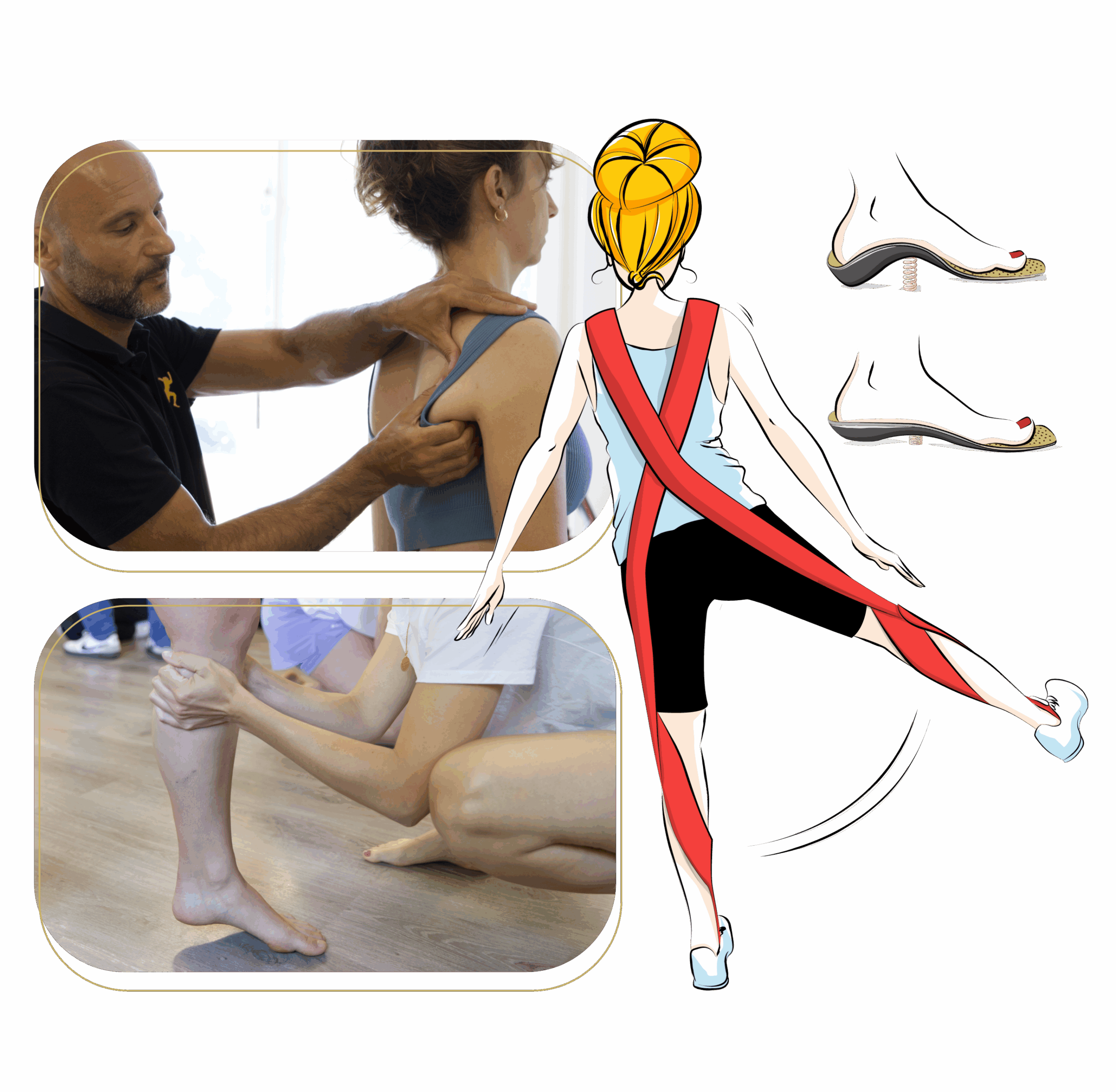
- Ortho-dynamic straps: Targeted rehabilitation of muscle chains in motion.
- Active Postural Insole: a personalized sensory stimulator designed based on the OPS postural assessment. It corrects both static and dynamic foot disorders while reprogramming ascending muscle chains. Custom-made, lightweight, adjustable, and designed using 3D injection technology.
- Active Postural Splint: Rebalances the jaw, improves breathing and posture. The oral activator stimulates cranial proprioception, releases mandibular tension, and enhances sleep quality.
- Active Ocular Board: Retrains visual coordination and reduces cervical tension. By strengthening the oculomotor muscles, this tool improves visual endurance and directly influences head posture.
- Personalized Protocols: Tailored to each patient (athletes, seniors, children).
The OTTE Method: A different approach to posturology training
3D Biomechanical Analysis
Rather than correcting what appears abnormal, the practitioner seeks to understand why the body is organized this way and what it reveals about the overall imbalance.
This postural assessment makes it possible to identify:
- Areas of Locking or Instability
- Chained Sensory and Postural Adaptations
- The Root Causes of Pain or Performance Loss
Example of application: A runner suffering from knee pain can have their running pattern analyzed in 3D, revealing excessive pronation or a pelvic imbalance that can be corrected through targeted exercises.
Active, Non-Compensatory Rehabilitation
To achieve this, it mobilizes precise levers that are consistent with each therapeutic profile:
- Neuroproprioceptive manipulations to reactivate sensorimotor loops.
- Dynamic activators such as postural straps, to guide muscle tone without restricting movement.
- Active orthopedic tools: dynamic insoles, dental splints, postural straps… all used not as crutches, but as sensory stimulators integrated into a global strategy.
Result: Your patients regain a natural posture without relying on external compensations.
Training Designed for Healthcare Professionals
Our training is designed for all healthcare professionals who wish to broaden their scope of practice and offer comprehensive management of postural disorders:
👣 Physiotherapists
Revolutionize your physiotherapy practice by integrating dynamic postural analysis and active postural rehabilitation. This training provides you with the tools to effectively treat chronic pathologies that are resistant to conventional approaches. Master the complete postural assessment using the OPS software to accurately identify proprioceptive dysfunctions responsible for recurrences. Learn how to design personalized postural rehabilitation programs that integrate ortho-dynamic straps and postural reprogramming exercises.
💆♂️ Chiropractors / Etiopaths / Manual Therapy Practitioners
Enhance your manual techniques with dynamic postural analysis and objective measurement tools. The OPS software allows you to objectively assess the effectiveness of your adjustments and structural corrections. Master the analysis of postural compensation chains to target primary dysfunctions and optimize your treatments. Integrate ortho-dynamic straps to sustainably maintain your manual corrections and reduce recurrence. Develop expertise in postural manual therapy for an innovative approach to complex musculoskeletal disorders.
🦶 Orthopedics: Podiatrists, Orthopedic Orthotists, Podo-Orthotists, and Orthoprosthetists
Revolutionize your orthopedic approach by integrating global postural analysis into your daily practice. The OTTE method enables you to move beyond traditional symptomatic correction to identify and treat the deep postural causes of biomechanical imbalances.
For Podiatrists
Expand your podiatric perspective by mastering three-dimensional postural analysis. Understand how foot imbalances impact ascending muscle chains all the way to the cervical spine. This training enables you to analyze postural compensations responsible for recurrent plantar pathologies: chronic plantar fasciitis, persistent metatarsalgia, progressive hallux valgus, and refractory Achilles tendinopathies.
Through dynamic postural assessment, identify plantar proprioceptive dysfunctions and their effects on global balance. Master the prescription of plantar activators that stimulate neuromuscular chains to achieve lasting postural rebalancing—well beyond simple mechanical correction.
For Orthopedic Orthotists and Podo-Orthotists
Transform your orthotic approach by integrating dynamic postural analysis into your design process. This training helps you understand how postural imbalances influence movement biomechanics and the effectiveness of your orthoses.
Learn to analyze patient-specific compensation patterns to create devices that harmonize with each individual’s natural postural balance. Master the principles of active proprioceptive stimulation to design orthoses that do not merely correct, but progressively re-educate deficient muscle chains.
This revolutionary approach significantly improves acceptance and therapeutic effectiveness of orthotic devices, reducing rejection rates and optimizing functional outcomes.
For Orthoprosthetists
Revolutionize your prosthetic approach by mastering the global postural impact of amputation. This training enables you to analyze the complex postural compensations that develop after amputation and adapt your prosthetic designs accordingly.
Understand the mechanisms of post-amputation postural reorganization: changes in sagittal and frontal balance, adaptations of contralateral muscle chains, and repercussions on the spine. Learn to design prostheses that integrate harmoniously into this new postural equilibrium, minimizing pathological compensations.
Master the analysis of load transfers and balance strategies to optimize the prosthetic interface. This global approach significantly improves gait quality, reduces compensatory pain, and promotes better bodily integration of the prosthesis.
🦴 Osteopaths
Enhance your osteopathic approach with precise dynamic postural analysis and objective measurement tools. This training revolutionizes your practice by providing a quantified view of the dysfunctions you palpate every day. The OPS software allows you to objectify your osteopathic corrections and measure their effectiveness over time. Master the analysis of postural compensation chains to optimize your treatment protocols and accurately target primary dysfunctions.
🏋️♂️ Sports Coaches
Revolutionize your approach to physical conditioning by integrating postural analysis into your training programs. Learn to detect postural imbalances that limit performance and lead to injury. This training enables you to offer sport-specific postural rehabilitation and optimize athletic performance through improved postural balance.
🌿 Alternative Medicine Practitioners
Whether you practice acupuncture, naturopathy, auriculotherapy, or other alternative approaches, this training enhances your holistic view of the patient. Understand the links between postural imbalances and energetic dysfunctions. Integrate postural assessment into your global diagnostic process and offer complementary postural rehabilitation alongside your natural therapies for a truly integrative approach.
🦷 Functional Dentists
Master the links between temporomandibular dysfunctions and postural imbalances. Learn to analyze the impact of dental occlusion on overall posture and integrate active oral orthoses into your practice. This training enables you to offer a comprehensive approach combining functional dentistry and postural rebalancing to effectively treat bruxism, neck pain, and TMJ disorders.
🩺 Functional Physicians
Enhance your diagnostic approach with a comprehensive postural assessment and develop a preventive strategy for chronic conditions. This training enables you to understand the links between postural imbalances and a wide range of symptoms: migraines, sleep disorders, chronic fatigue, and unexplained pain. Master the interpretation of 3D biomechanical analyses to identify the postural causes behind recurring pathologies.
Orthokinesy Course Program: Ortho-Dynamic Posturology (OTTE Method)
Our training program consists of 12 modules, including 11 e-learning modules (52 hours of video content) and 1 in-person module dedicated to hands-on practice over 3 days.
Module 1: Clinical Posturology
- Physiology of Postural Balance
- Postural Proprioceptive Dysfunctions
- Postural Role of the Feet, the TMJs, the Eyes, and the Inner Ear
- Identification of Factors Disrupting Postural Homeostasis
- Clinical Postural Tests
- Postural Reprogramming
Postural Analysis and Proprioception
Importance of Plantar Sensors
Module 2: Dynamic Posturology
- Investigation of the causes of posturo dynamic imbalances
- Applied functional postural biomechanics
- Dynamic and sports related pathologies
The foot in motion
Our fasciae
Module 3: Maxillofacial System
- Postural consequences of maxillofacial origin
- Effects on snoring, bruxism and orthodontic disorders
- Influence of the TMJ on head posture
- Oral orthodynamics
The tongue
The hypotonic tongue
Module 4: Oculomotor System
- Postural consequences of ocular origin
- Oculomotor stimulation: proprioceptive and muscular
Binocular vision
Rehabilitation
Module 5: Vestibular System
- Postural consequences of vestibular and auditory origin
- Functions of the inner ear
- Testing and repositioning maneuvers for BPPV
BPPV: Benign Paroxysmal Positional Vertigo
Dix Hallpike test
Module 6: Podal System
- Postural consequences of static and dynamic podal origin
- Podal deficiencies: muscular, articular and proprioceptive
- Functional podal adjustment
- Insoles and footwear: types and postural and dynamic impact
- Foot pathologies and solutions
Subtalar joint deformity
Tibialis posterior and fibularis longus
Module 7: Motor Preferences
- Impact of motor preferences on posture and movement
- Sports and motor preferences
- Advantages and disadvantages of minimalism and maximalism on posture
- Prevention and best practices
Forefoot strike
Braking running and rolling running
Module 8: Postural Preferences
- The orthokinesic laws of postural preferences
- Mechanisms of the different postural preferences
- Impact of postural preferences on the spine
- Functional postural preferences in walking and running
- Postural preferences and emotions
Genu Varum
Intero-external
Module 9: Orthokinetic Manual Therapy
- Dynamic and postural manual therapy
- Soft tissue readjustment in sports injuries
- Orthokinesic techniques for deep tissue and fascial release
- The different orthokinesic pathways: lower limbs, pelvis and spine, respiratory and digestive system, skull TMJ and eyes)
- Correction and harmonization of a faulty sports movement
Mobilization of opposing girdles
Diaphragm
Module 10: Ortho-Dynamic Posturology
- Orthopedic adjustment of postural straps
- Proprioceptive and muscular postural stimulation
- Management of the sports movement
Spinal derotation – Level 1
Flexion extension, supination-pronation
Module 11: “OPS” Postural Assessment
- Advanced postural and dynamic biomechanical and proprioceptive analysis
OPS Postural Assessment: Orthokinesy
Module 12: Practical Training (In-Person)
- A three-day in person practical session
- According on our schedule
In person over three days
Therapists testimonials
Therapists have transformed their practice thanks to Orthokinesy: why not you?
If the video does not display, it means you have not accepted cookies. The video is available on YouTube.
FAQ – Posturology Training
What Is a Postural Assessment?
A postural assessment is a comprehensive clinical examination that analyzes a patient’s postural imbalances. It includes the evaluation of postural sensors (feet, eyes, TMJ, proprioception), static and dynamic tests, as well as the identification of dysfunctions that generate chronic pain and instability. Our training teaches you how to master the complete postural assessment using the OPS software and the protocols of the OTTE method.
How to Become a Certified Posturologist?
To become a posturologist, you must be a healthcare professional (physiotherapist, osteopath, physician, podiatrist, orthoptist) and complete specialized training in clinical posturology. Our certifying training in orthokinesy enables you to acquire all the necessary skills: postural diagnosis, active postural rehabilitation, and the use of innovative tools such as active postural insoles.
What Is the Difference Between Static and Dynamic Posturology?
Static posturology analyzes posture in fixed positions (standing, sitting), whereas dynamic posturology (orthokinesy) studies postural imbalances during movement. This dynamic approach reveals dysfunctions that are invisible in static assessments and enables more effective and long-lasting postural rehabilitation.
How Long Does the Complete Training Program Last?
The complete orthokinesy training program is delivered through progressive modules combining theory, hands-on practice (over three days), and e-learning, for a total of 52 hours of video content accessible via a dedicated platform.
Conclusion: Orthokinesy, a Natural Evolution of Posturology
- Compensations during walking or running (e.g., pelvic rotation, ankle restriction)
- Inappropriate motor strategies (e.g., overuse of a muscle group to compensate for a weakness)
- Vestibular or oculomotor imbalances that only appear during movement

Want to learn more about the training?
Download the new brochure and discover the behind-the-scenes of Orthokinesy